Towing system and method for a water sports apparatus

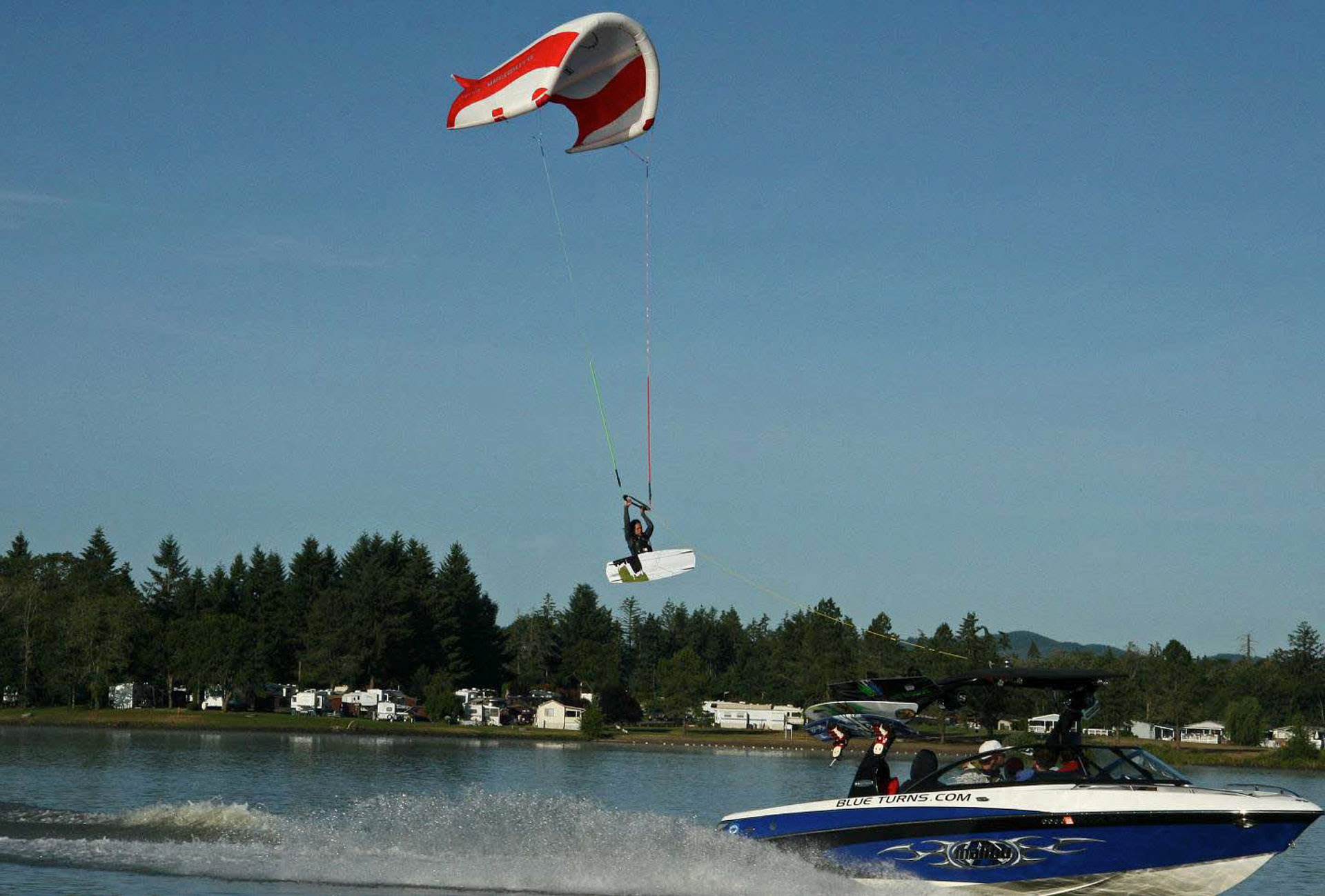
Riding with a WakeKite is like "wakeboarding on the moon." The kite, which rides overhead, provides on-demand lift to the rider, and feather-soft landings. Here WakeKite team rider Kedzie Gunderson sails across the sky above Fern Ridge Reservoir near Eugene, Oregon, circa 2008.

My first patent came at age 32 when I invented and helped develop and manage the WakeKite™, a radical creation merging kiteboarding with wakeboarding & waterskiing. The idea was born out of early kiteboarding experiences with my dad up in the Gorge. After a lesson we were taking together ended with my dad tearing his bicep, it's fair to say we discussed the perils of the sport on the ride home. A newbie myself, but thinking I'd be fine due to surfing the Oregon Coast my whole life, I'd also had some close calls. On one particularly gusty day, I got "yarded" across the Columbia, nearly into the path of a barge. But don't get me wrong, kiteboarding is awesome. I'm all about it. Further, kiteboarding gear has come a long way and the equipment available now is amazing. 

This is a VERY low-res video, circa 2008, which captures a lot of fun had on the WakeKite. As the brand manager and co-inventor, one of the most exciting aspects of watching WakeKite grow was seeing all of the random videos riders posted from around the world. And even though I left WakeKite to pursue ShadowBox after five years (which took the proverbial wind out of its sails), enthusiasts continued to create and post WakeKite content for years after. -- Check out this additional WakeKite video, titled, "8-months of Air." The jump at the 1:19 mark is simply ridiculous. Test rider Ben Noble clears a 50' kicker during an exhibition at a pro wakeboarding event. A bit like poking a tiger in the eye, I think some of the purists weren't pleased, but the crowd loved it. I think we sold a mint of WakeKites at the event that day. Riders featured in these videos are numerous, but the top jumps you will see were done by Ben Noble, Kedzie Gunderson, and Raleigh Murch...our best rider out east. Thanks to all who contributed.
Yet back then, I began thinking. What if one could experience some of the thrills of kiteboarding on a windless day, using a boat's pull to simulate wind? Maybe a person could train and get used to kite control before going solo on a real kiteboarding rig? That was the spark, and so after copious sketching, I decided to try for an on-land model, using natural wind to simulate the boat's pull.
Duct tape Innovation
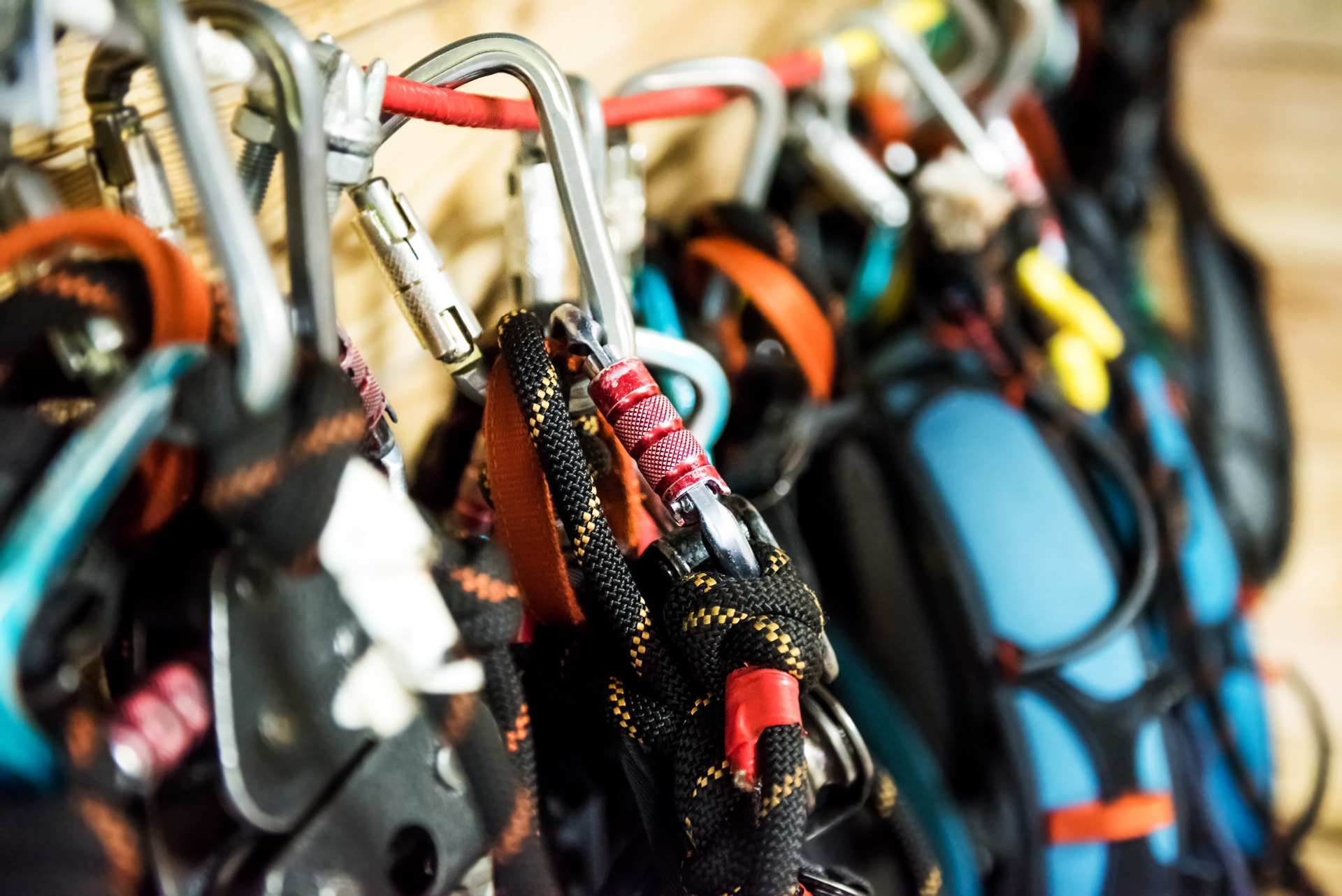
Pursuing the goal of lift, I started gathering various off-the-shelf kites, handles, ropes, pulleys, stakes, and, of course, duct tape. I began merging parts from three radically different worlds—kiteboarding, rock climbing, and traditional kite flying. I read about kite design, general aerodynamics, rope and pulley systems, knots, and more, building all kinds of crazy rigs. I scouted great places to fly in private and waited for the wind to blow to test.

Buying all kinds of parts from kiteboarding, climbing, and traditional kite flying, I began cobbing together prototypes to test in the natural wind. Image: Envato Elements
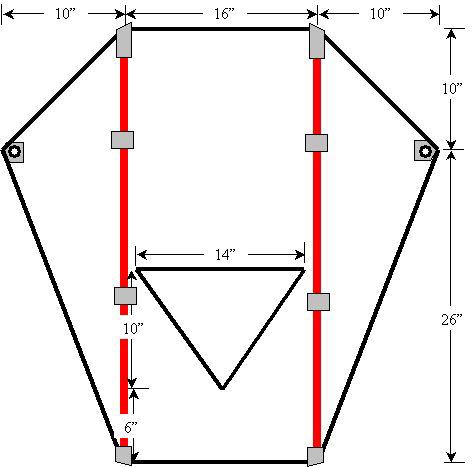
While I planned to ultimately incorporate the inflatable technology and ruggedness of kiteboarding kites into what would finally become known as the WakeKite Superfly 9.0, my first objective was to achieve kite behavior that was largely the opposite of a kiteboarding kite design. To any of the uninitiated, kiteboarding kites are rather unstable but also highly steerable. It's their back-and-forth, figure-8 pattern of steering that provides speed and lift. However, figuring most wakeboarders and waterskiers were unlikely to be cross-trained in kiteboarding or even traditional kite flying, I knew I needed a far more stable kite, something very easy to control and safer to use. 
The "Sled" Sky Anchor
If safety and ease of use were the goals, I knew I needed an inherently stable kite, meaning that no matter the wind or pull direction, the kite would try to climb to the zenith (essentially high noon above). I needed the kite to function somewhat like a mini-parasail, with a line and handle attached midway down to provide lift to a rider. However, I was aware that parasailing was outlawed for private use on most lakes and rivers across the country and in many parts of the world. If this worked and I wanted to turn it into a real product, would it be commercially viable?
Research into the kiting world led me to consult with the President of the American Kiteflyers Association (AKA). Gracious enough to meet me down in Lincoln City, Oregon, home to one of the world's largest annual professional kite festivals, what I learned in that meeting was crucial to the success of WakeKite. Specifically, after talking about my goal of zenith stability, I learned that one specific style of kite hauls up the line in large kite festivals, allowing for many giant kites to attach to it: a "sled kite." Bingo. I began to buy, and in some cases, build sled kites forward, still testing on land. 

Sled kite design. Simple, but effective. This was a great start! Image Credit: eoutlet.factory
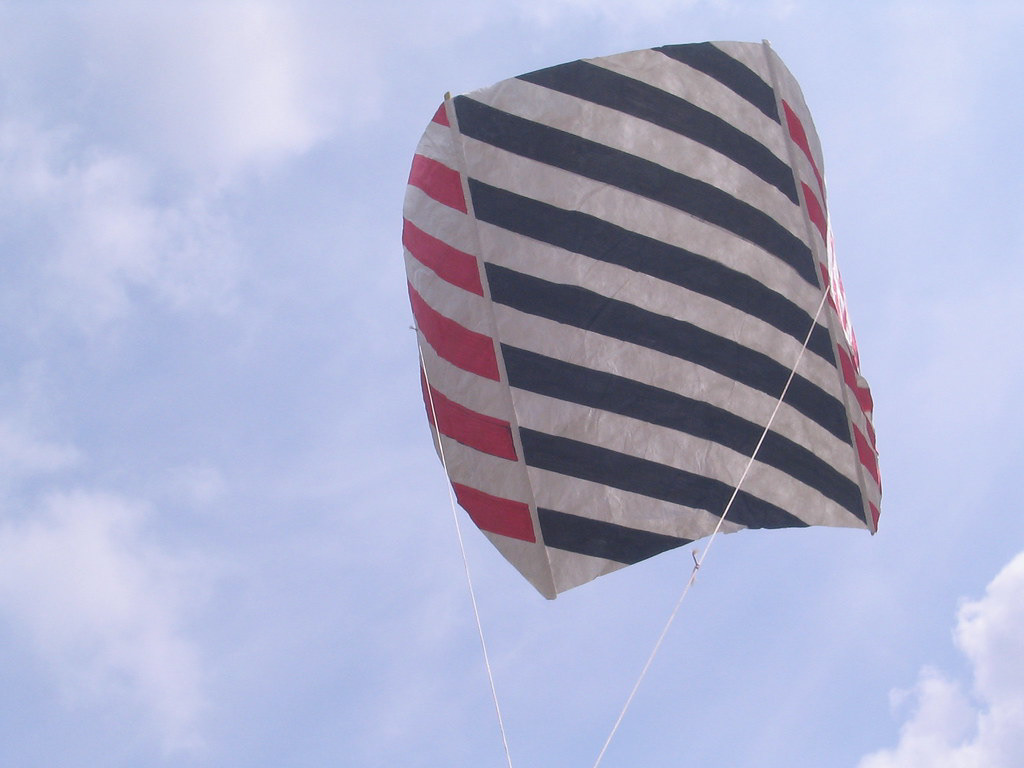
A sled kite in action. Known to hold other, connected kites up in the sky at large kite events, this was the direction we needed to go for stability (albeit with several changes to allow for floatation, durability, and steerability). Image Credit: Hanan Cohen
A Golden Time
This testing period on land, alone, was a golden time. It was the essence of invention, just my loose mind, no rules, and little protection. Testing several kite and line rigging builds, I had small successes here and there. Needing a sustained 18-20 mph wind, which doesn't occur often, I brought as many configurations of the kite system as possible each time I went out. I experimented with sled kites, attaching midway-down lines to them, running around underneath, jumping, and imagining the wind was from a boat's pull. I tried different pulleys, ropes, and stretchy and non-stretchy lines, attaching them at various points. It was an invention process by triangulation and elimination.
Eureka!
After about 12 different outings to test "it" finally happened. My wind alarm chirped, and I had a new sled and pulley system ready that looked very promising. This new system was different because, apart from the main kite line going from the ground stake to the sled kite, I had attached three additional lines to the kite: one on the left edge, one on the right edge, and one midway down the main kite line. The sidelines were very long, easily 100', and were intended to remain slack until I was ready.
I launched the kite with the three lines hanging below it. I brought along a 2.5' wide 3/4" wood dowel with metal eyelets on each end and foam in the middle. I clipped each eyelet to the end of the two side lines and reeled in each side to about 50', making the lines taut with the kite flying above. I now had a steerable sled kite. By tipping one side or the other of the handle, I could steer the kite. Eureka! A kite that is steerable but otherwise rides the zenith when undisturbed.
I donned my helmet and gloves and began running back and forth under the kite, imagining I was being pulled behind a boat and crossing the wake. I had experienced this sensation in earlier tests, but something incredible was happening here. This time, when I steered the kite in the direction I was running, it pulled me hard in that direction. If I then steered the kite upward suddenly, it would lift me off the ground. Well, sort of. The sled kite I was flying wasn't that large (we would eventually build a larger, inflatable version, easily three times the size). I was getting some lift, maybe 25-30% of what I desired, but I felt it. There was potential here!
A Test in My Pocket
With a successful test in my pocket and a video to prove it, I began securing funding. Through the Portland Angel Network, local Intel businessman Kevin Johnson saw the value in my idea. I had met with Kevin early on, before heavy R&D, and he agreed to support the R&D costs, which led to the successful test and his further investment. Kevin also introduced me to Ben Noble, an excellent wakeboarder who influenced the design and became our best tester and professional exhibition rider over the next six years. Fellow test and exhibition rider Kedzie Gunderson matched Ben's skills and contributions, proving equally valuable on and off the water. Raleigh Murch, out east, did numerous demos and boat shows for WakeKite and was an incredible rider who could make any pro event demo look amazing. Those three formed an incredible trio, but I'm getting ahead of myself!
Impressed with the test video, Kevin agreed to invest further. While securing only $25K at that time, I took a significant risk and quit my day job to focus full-time on advancing the technology. I would not regret the decision.

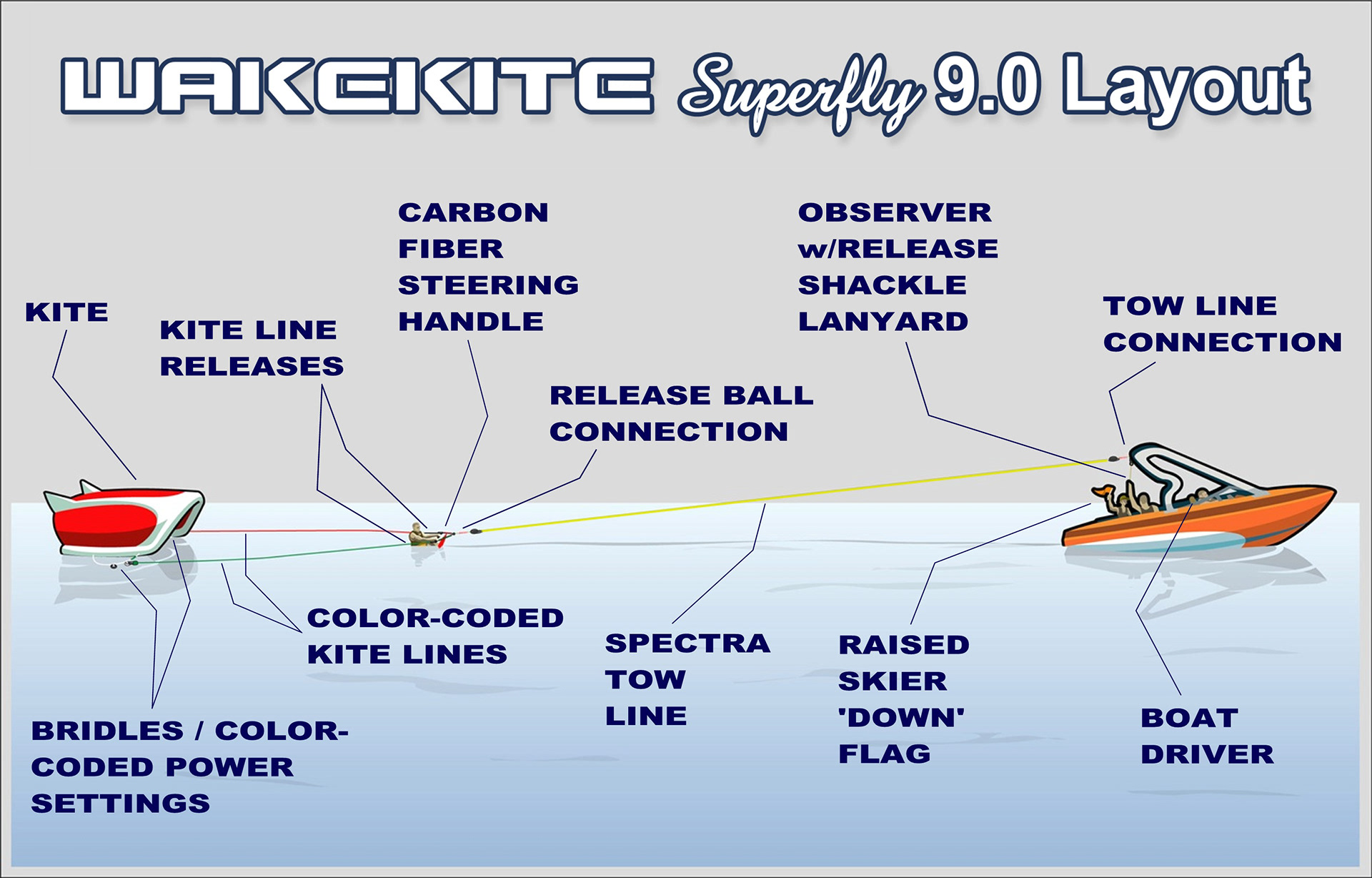
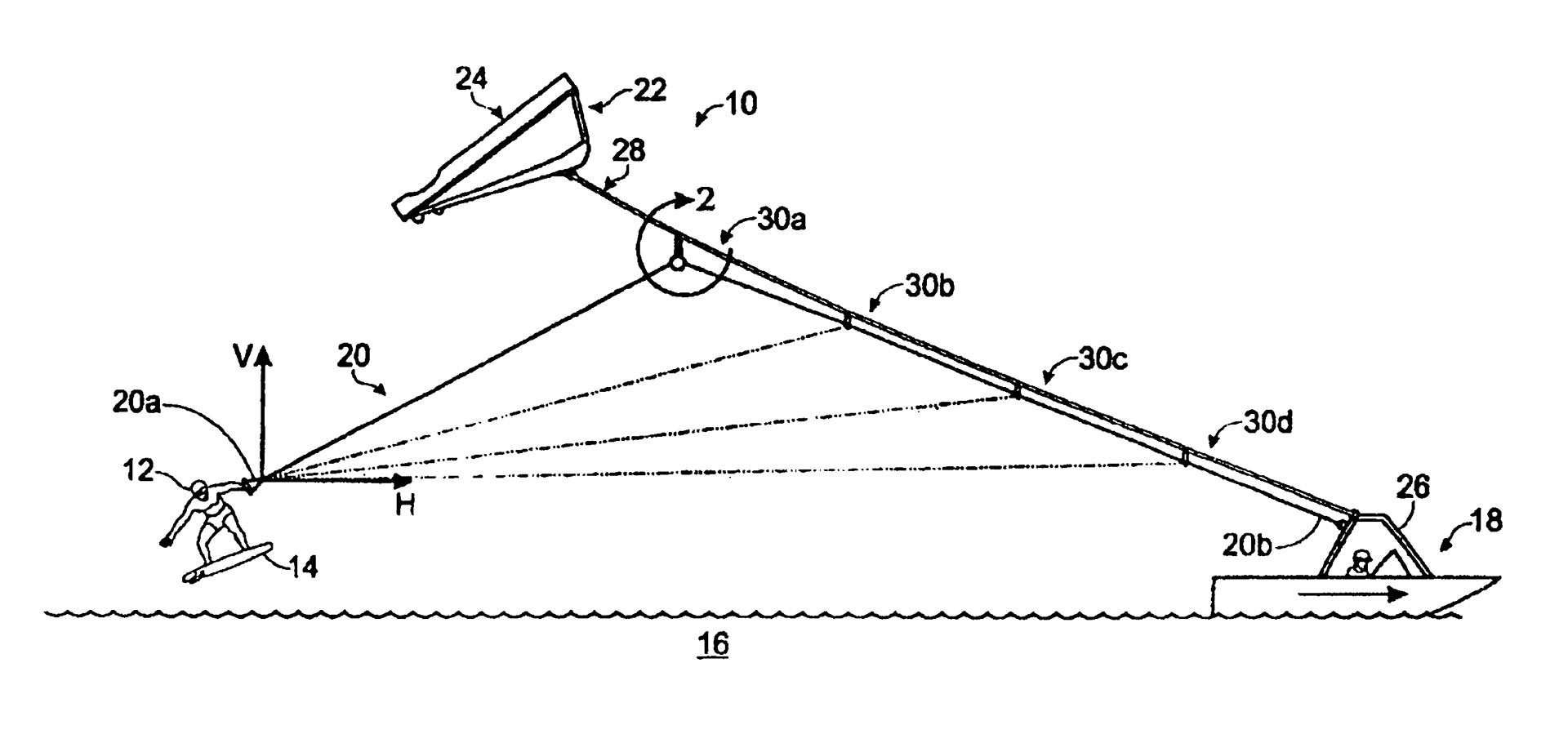
The layout of WakeKite. Our patent was on the safety release system.
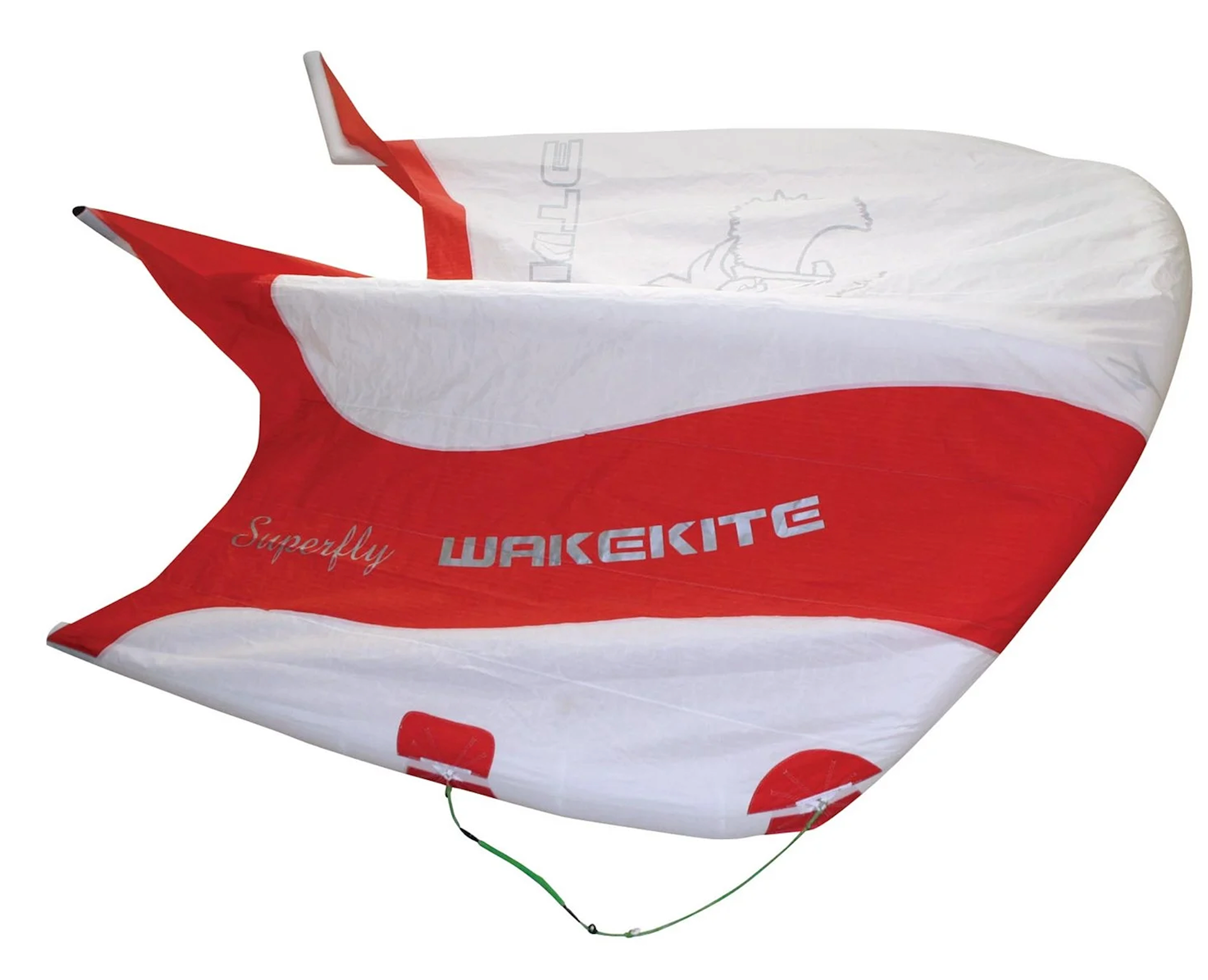
The first 9.0 meter "WakeKite Superfly"
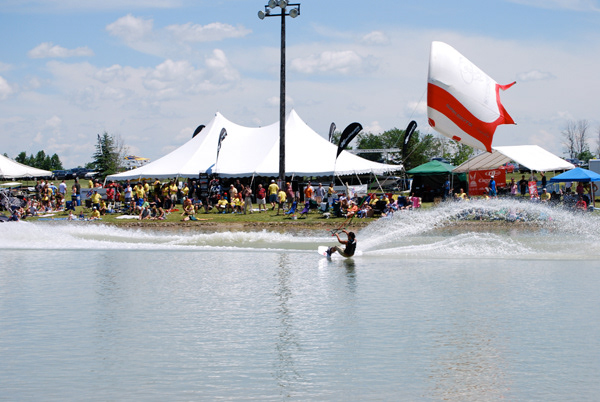
A team rider demoing in Texas.
The first 9.0 meter "WakeKite Superfly"
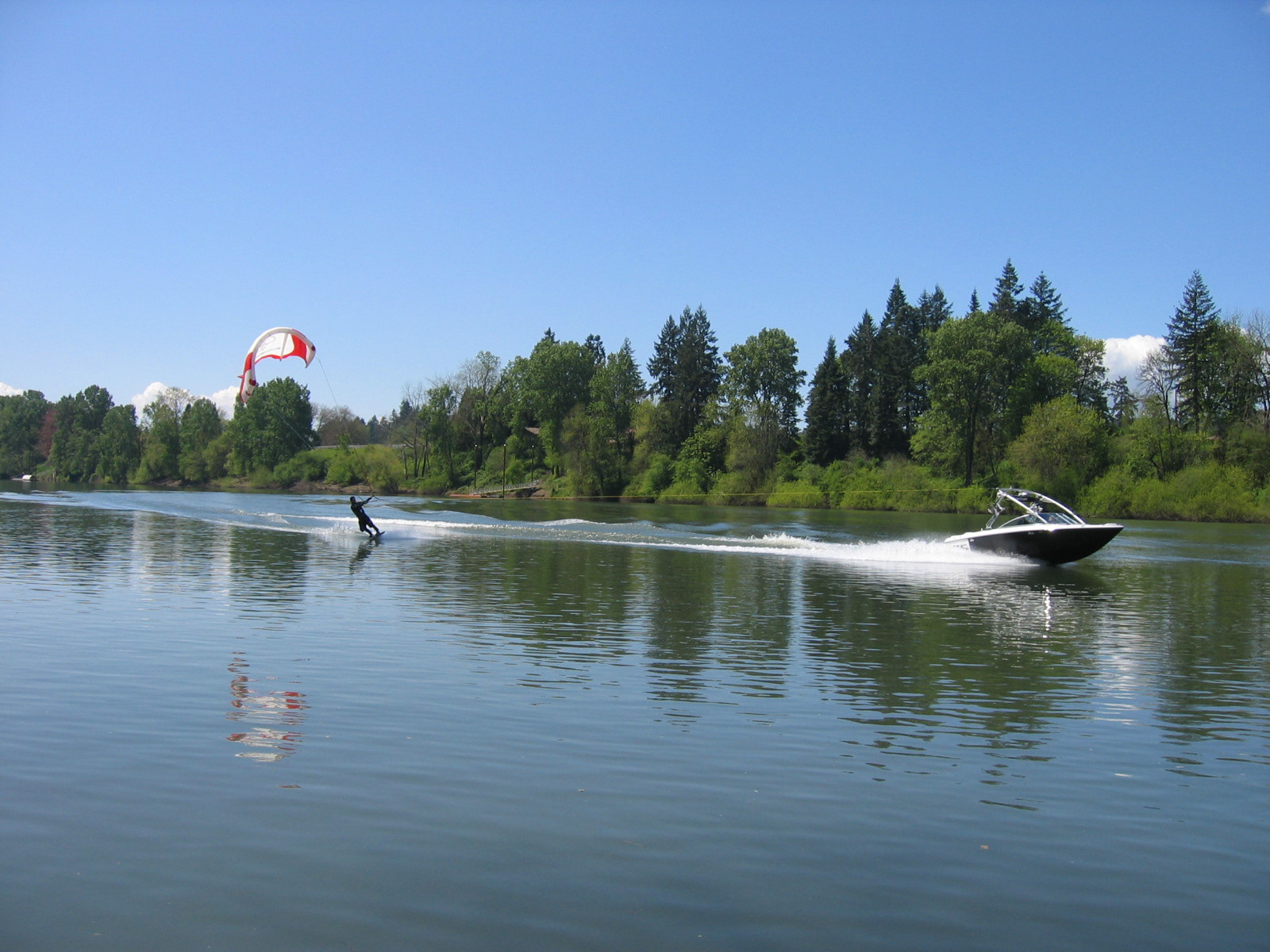
A team rider demoing in Texas.
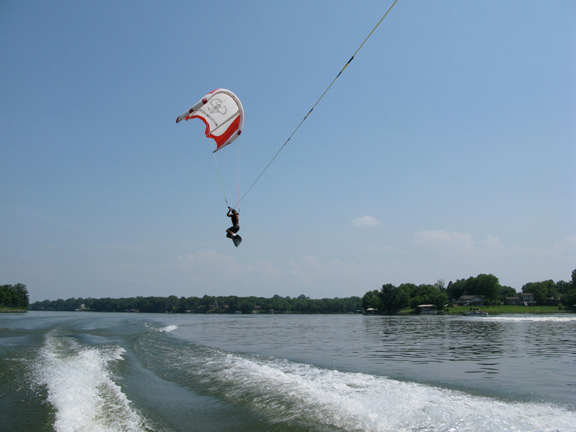
Team rider Ben Noble going big.
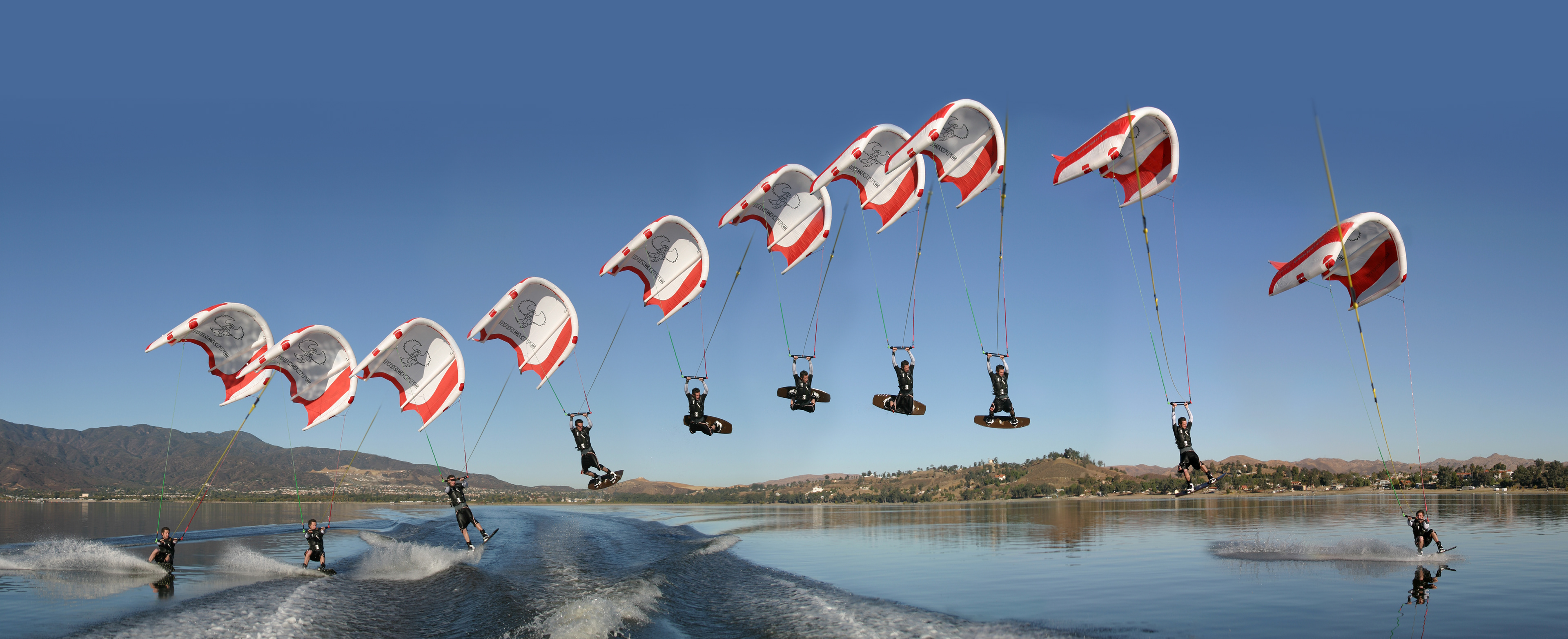
An amazing sequence capturing team rider Ben Noble on a shoot in California.
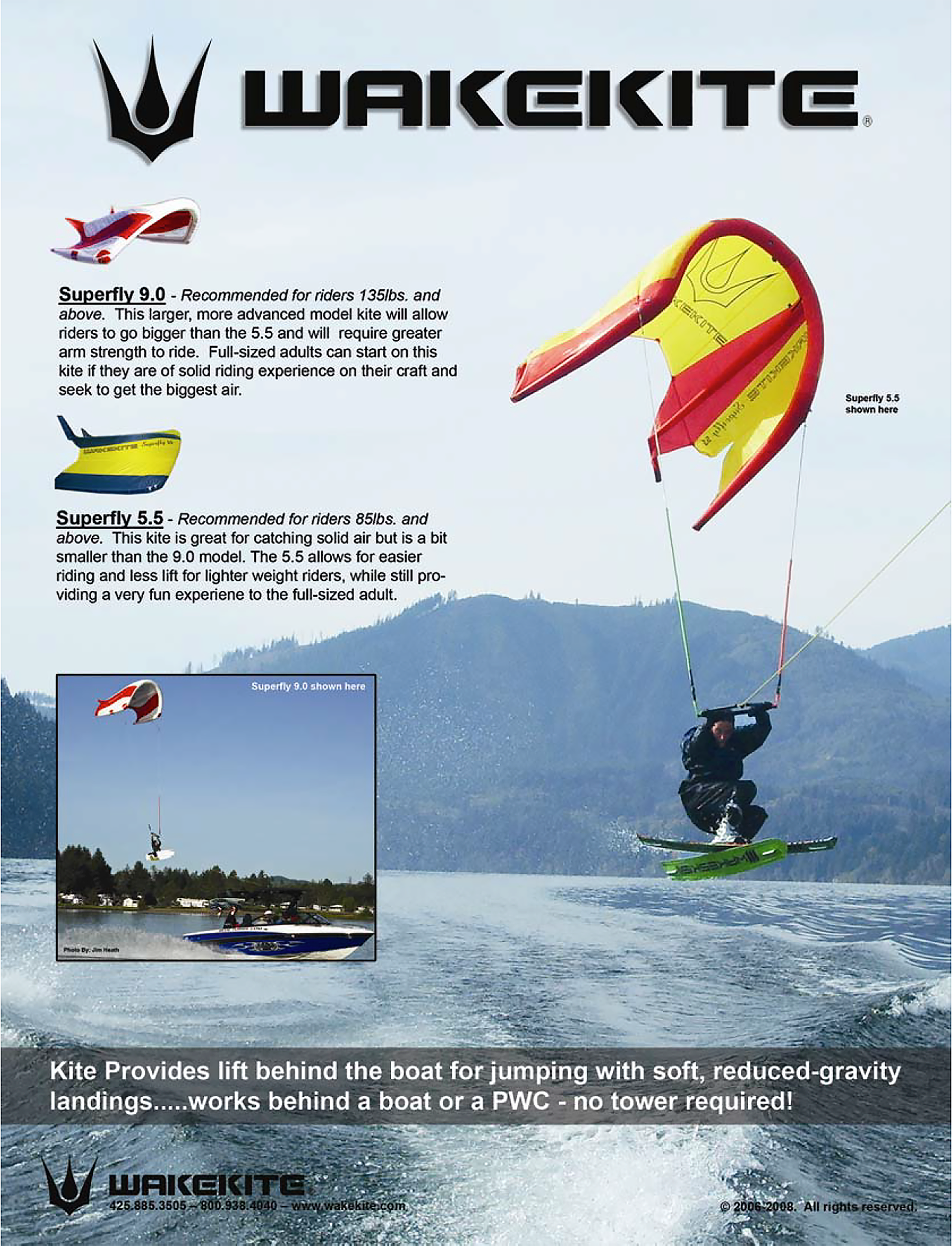
Going for the Patent
We knew we had a cool idea, but the question was how to protect it intellectually. Additionally, we had concerns about infringing on existing patents in kiteboarding, kite flying, parasailing, and related sports. We needed to consult a patent attorney. So, we contacted Brad Ganz of Ganz Law. Brad was impressed with our concept and helped us identify certain zones for potential patentability. Through this process, we focused on our handle and release system, a key safety feature that caused the WakeKite to automatically detach from the boat when the rider simply let go. On October 6, 2009, we were issued US patent RE40926 E1.

One of the images in our patent, US RE40926 E1
Building the Engineering Team
During this patent exploration period, we steadily upped our game in terms of personnel and kite prototype production. We first sought help from top North kiteboarding engineer Ken Winner, who helped us develop our initial prototypes using inflatable kiteboarding technology. While we didn't achieve a successful kite with Ken, we learned a lot, and he later introduced us to two Stanford PhD graduates who did. Enter Corwin Hardham and later, Joe Van Niekerk, both PhD grads in mechanical engineering from Stanford. These two took on the challenge, and before long, we had what we needed: a patentable handle release and a zenith-seeking kite built for the rough environment behind the boat. If you're interested, you can read more about all of that work in the BRANDS section under North Kiteboarding™ and HO Sports™.
After a year's worth of building prototypes and testing, we were ready to present it all to a major waterski/wakeboarding brand. The Meriweather Group facilitated that meeting and our live demo went off without a hitch. HO Sports​​​​​​​, Inc. bought WakeKite lock, stock, and barrel in 2006. I was then appointed as the Global Brand Manager of what became officially known as WakeKite™. 

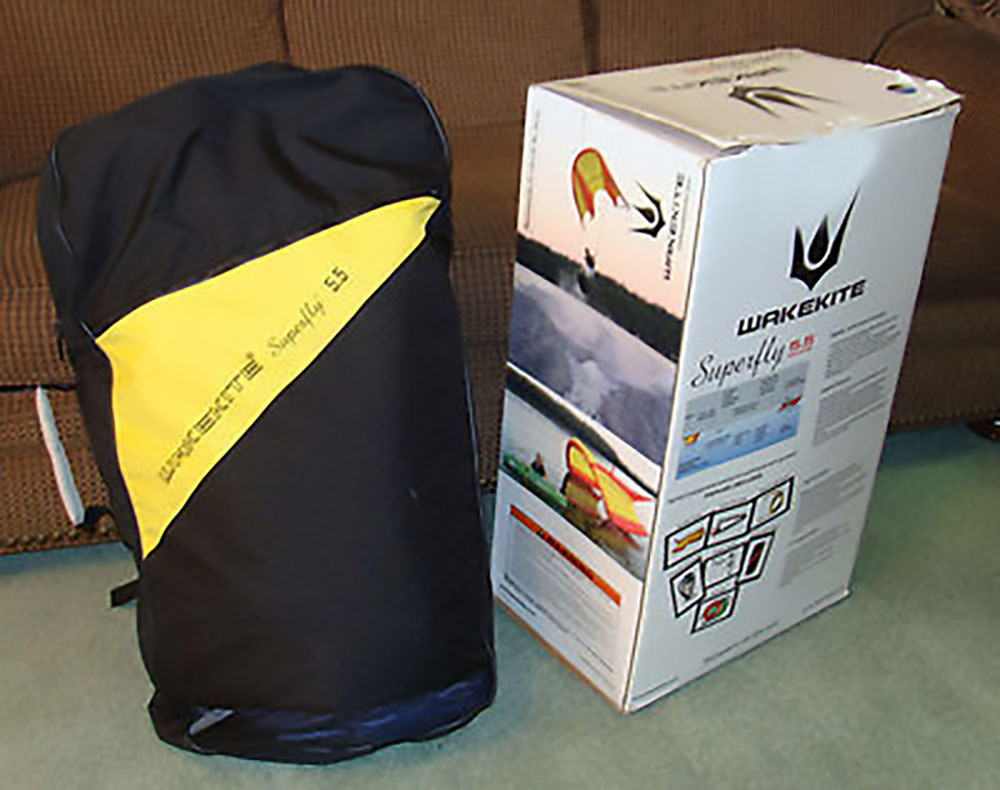
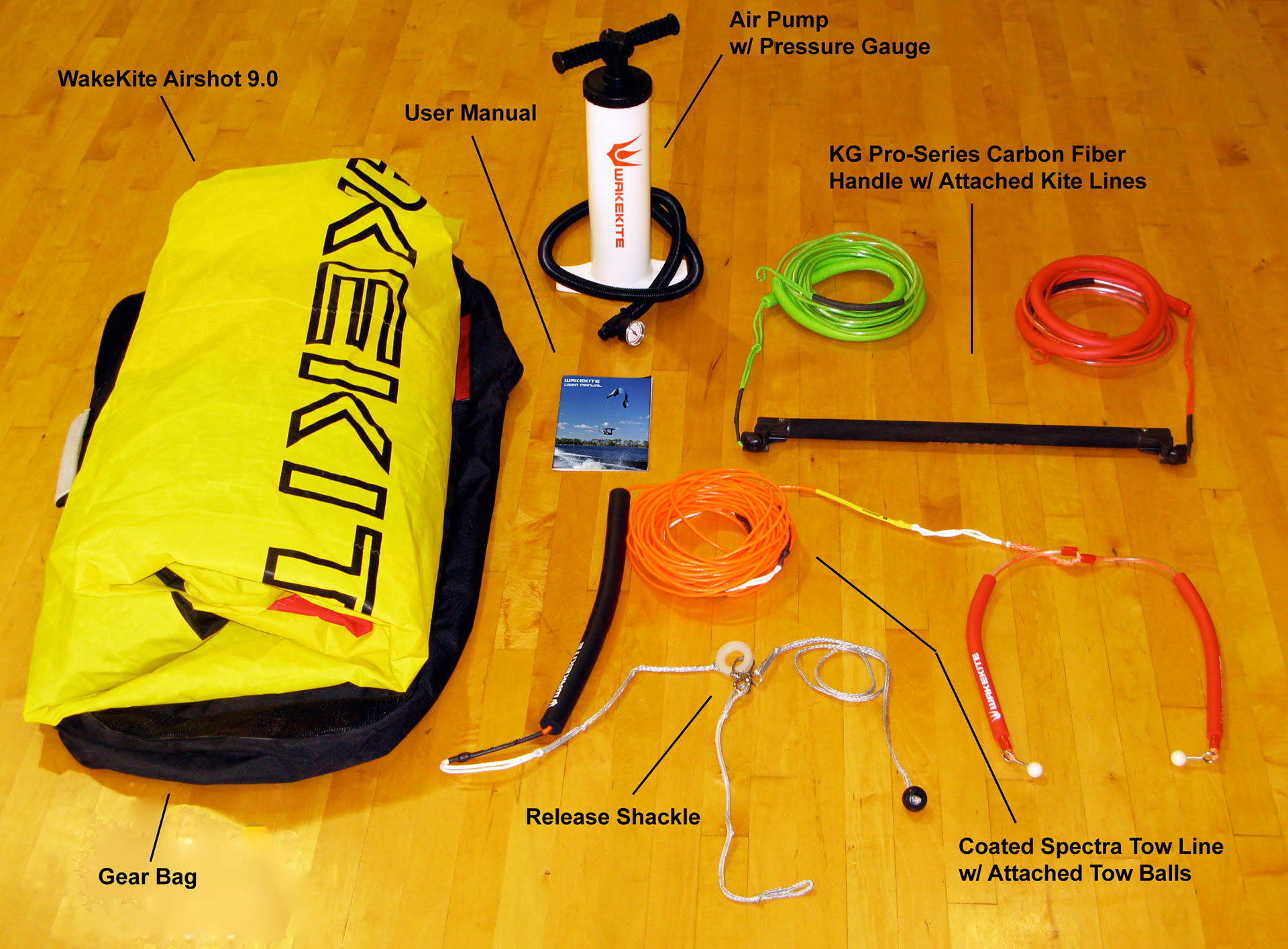
The contents of the Airshot 9.0 Package. Originally the Superfly 9.0 (standing for 9 square meters of kite), this was v2.0 which sported an upgraded handle and release system and a coated tow line.
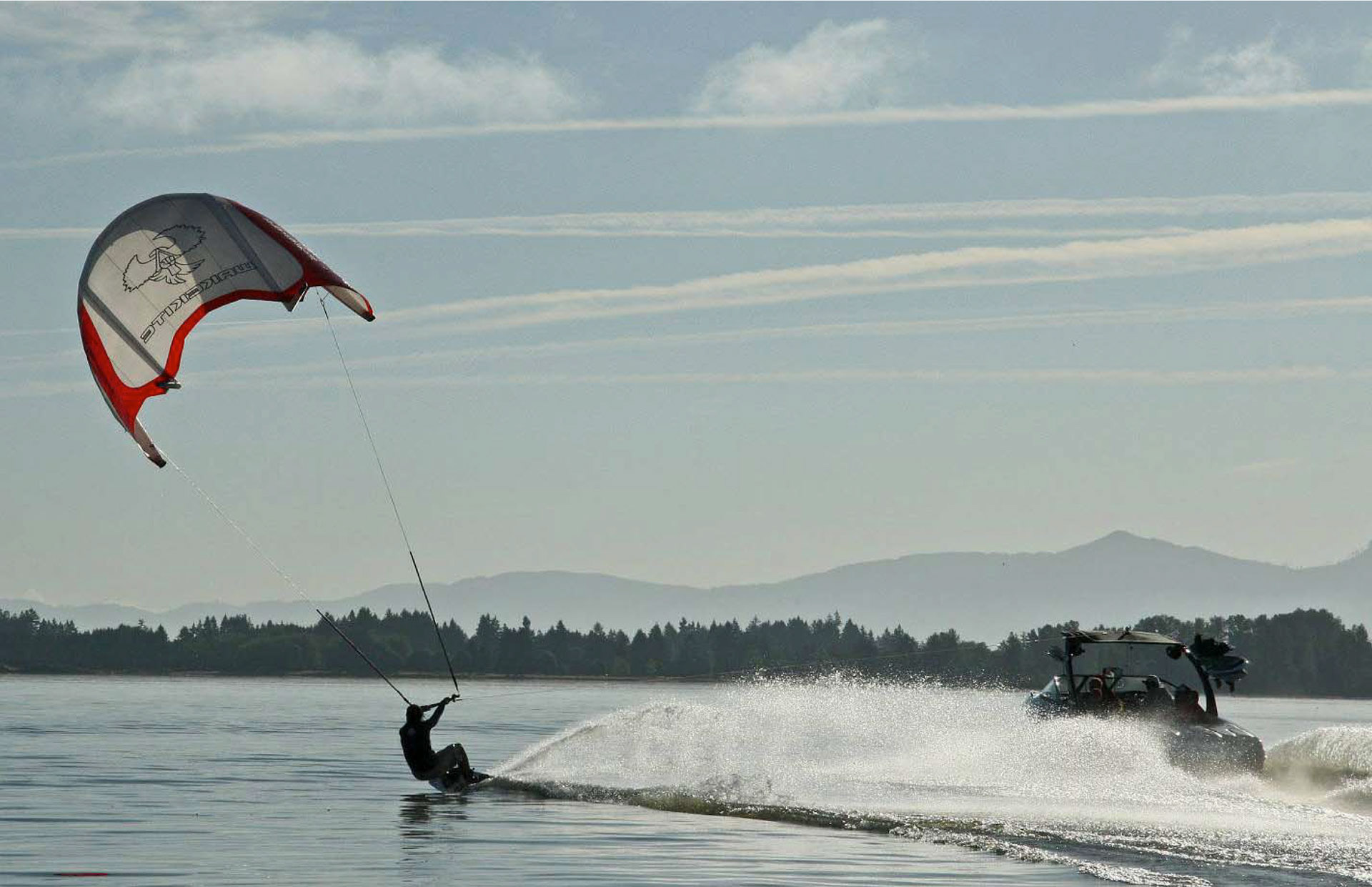
This picture was shot on Tamarack Lake south of McCall, Idaho. We were there for a video shoot and to introduce the sport to some local dealers. The water, wind, and light were perfect during this early morning session. Here team rider Ben Noble cuts outside, getting ready to release the kite back to center for a jump approach. Funny as it is, when later testing out on Payette Lake in McCall, Adolphus Busch (of Anheiser-Busch) chased us down in his speedboat and kept flipping hundred dollar bills at us until we finally agreed to sell him one of our test kites.
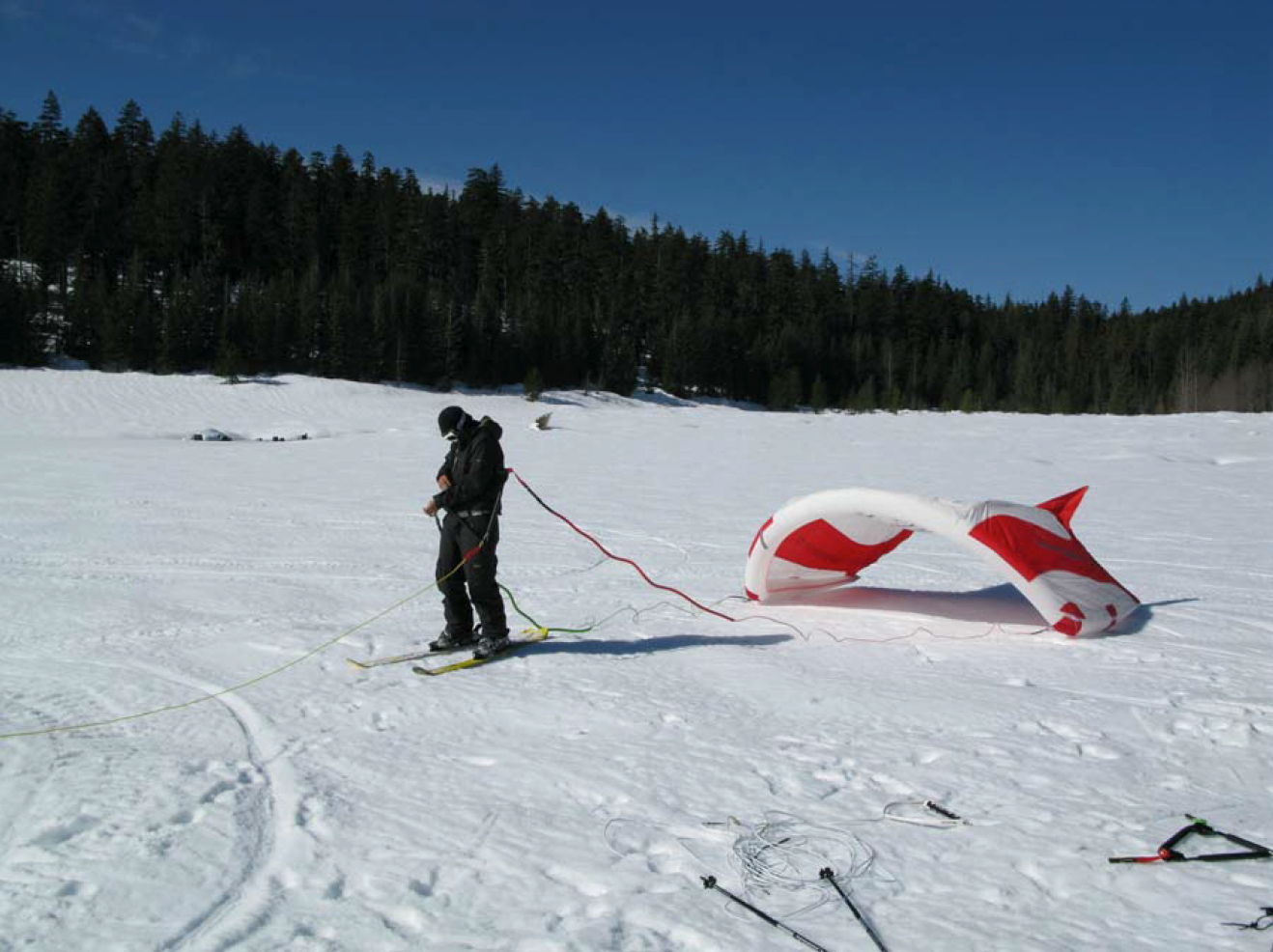
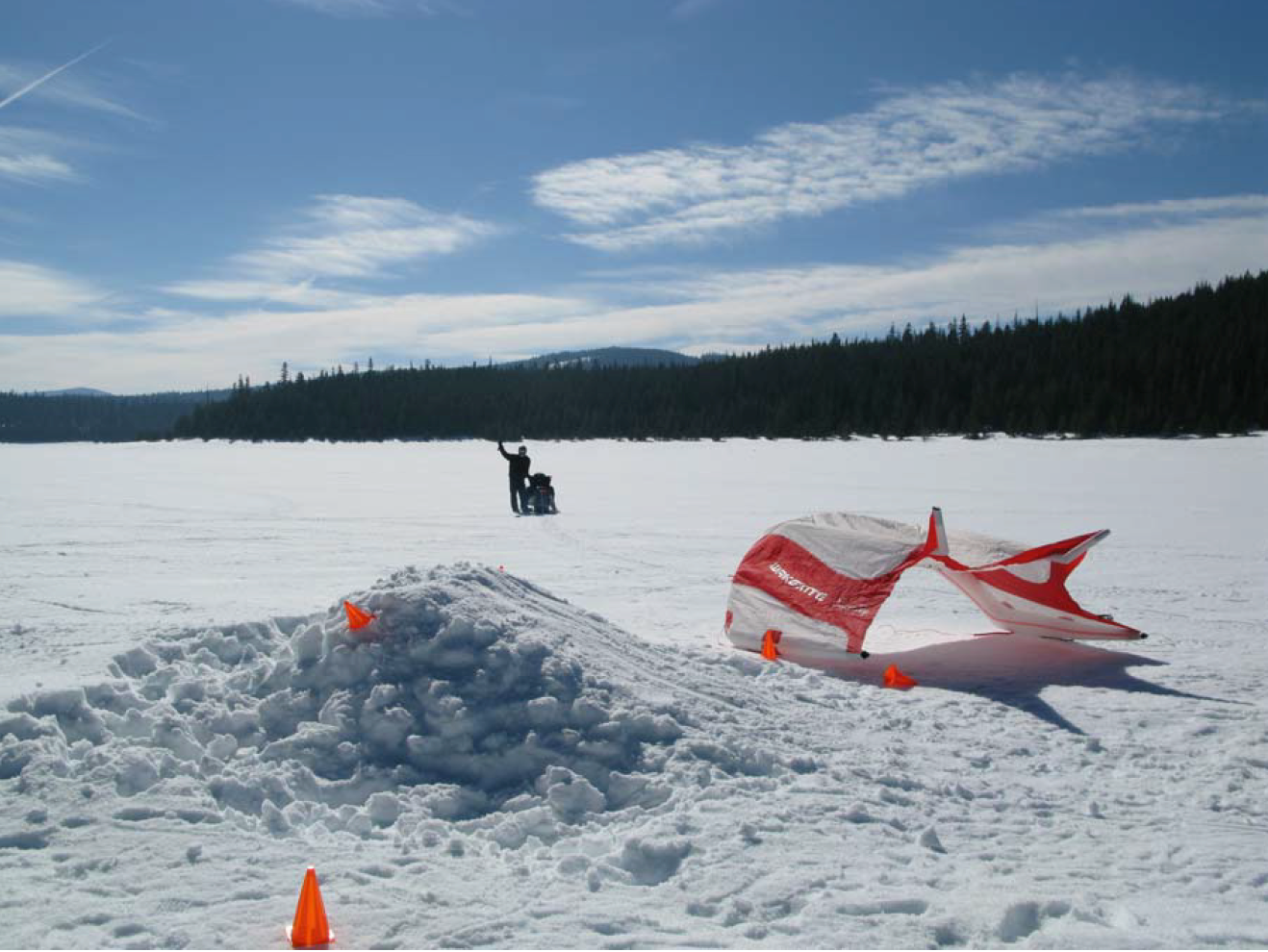
Yep, we tried the WakeKite behind a snowmobile on a frozen lake on Mt. Hood. Nuts! Test rider Kedzie Gunderson was the first to try the WakeKite behind the snowmoble. A near expert snow skier, she was a natural choice.
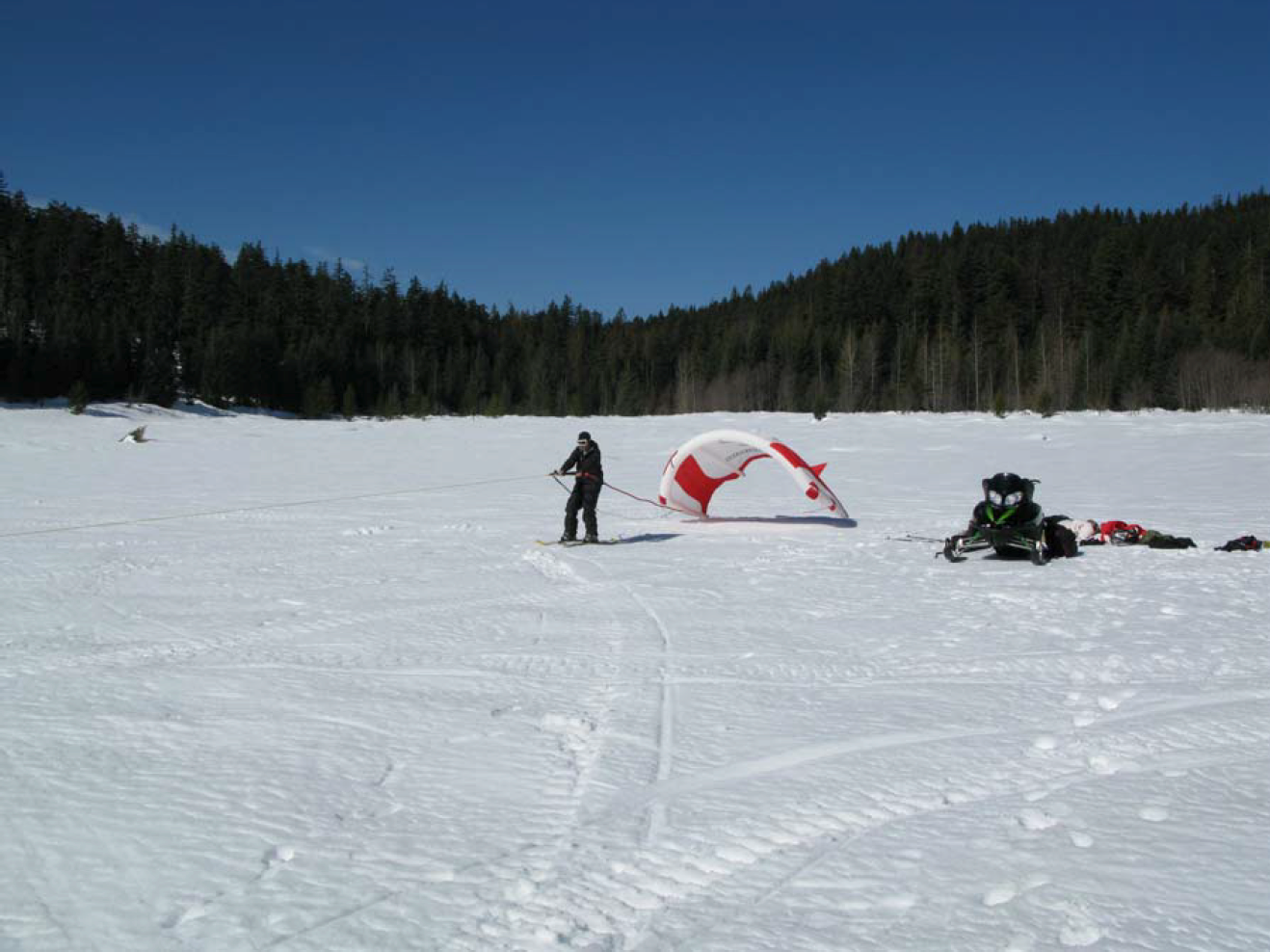
Here she goes....
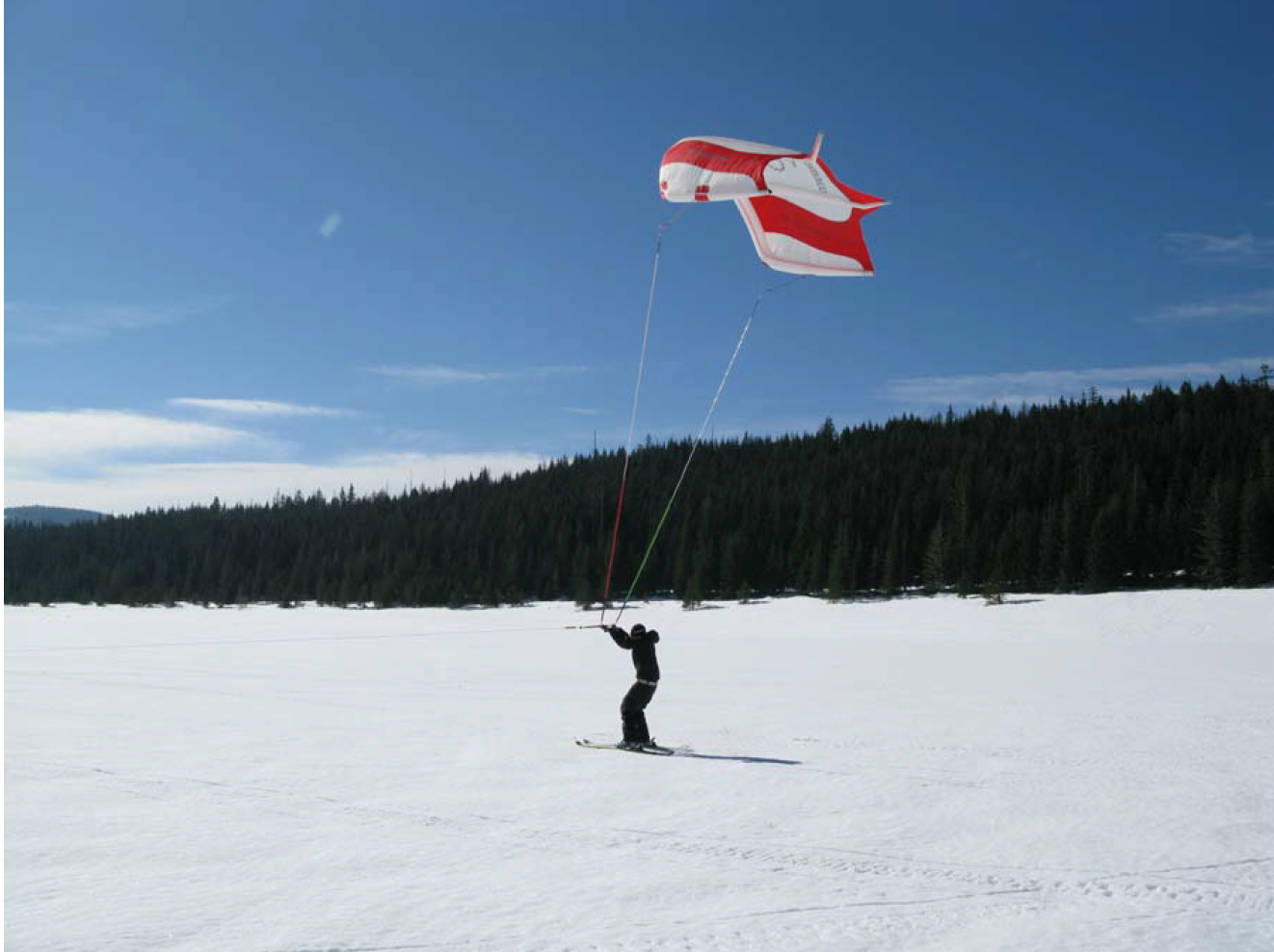
Here she goes....
Off and riding!
Off and riding!
Here's one of the kickers we built to provide a launch pad.
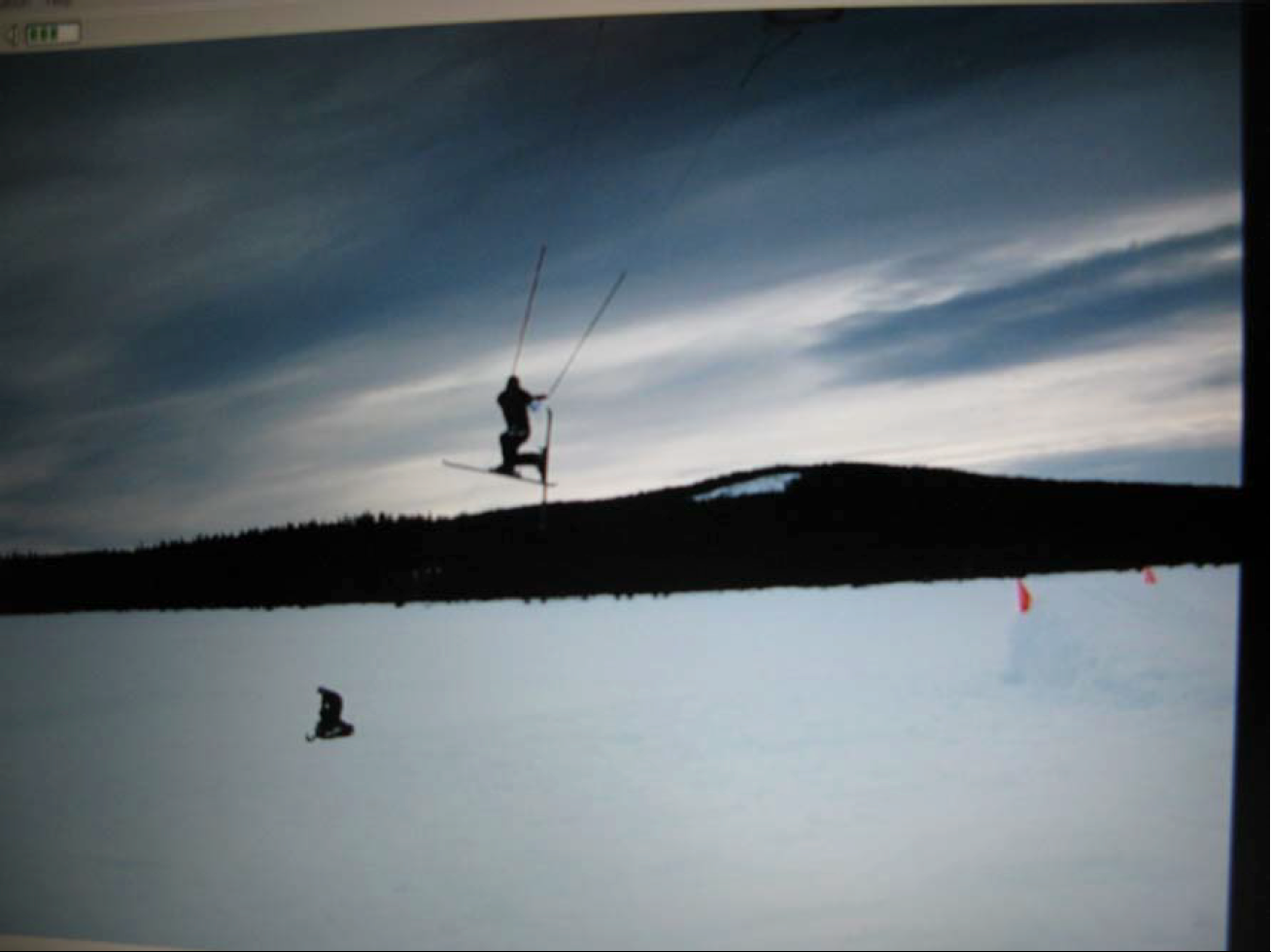
Kedzie Gunderson pulling some kind of stunt over the frozen lake.
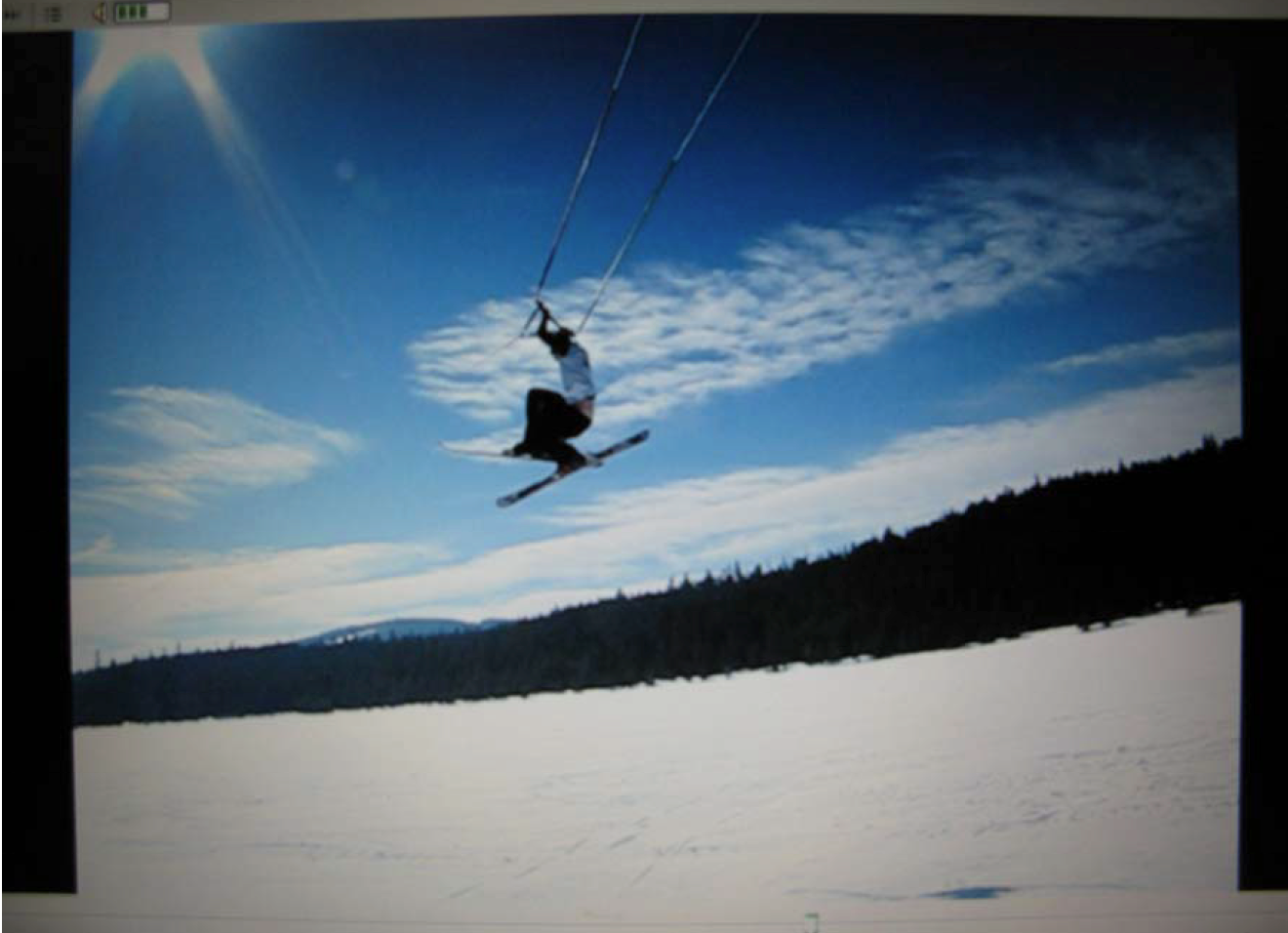
Test rider Ben Noble, also a near pro snow skier, busting a big air behind the snowmobile. What a crazy application!
My tenure with HO Sports provided an experience that's only possible when you're backed by the largest company in the industry and you're on the world stage. I even managed to get the WakeKite featured in a Showcase Showdown on 'The Price is Right'—getting the chance to hang out backstage with Drew Carey and family friend Sally Struthers! For more history on WakeKite see the BRANDS and ATHLETES pages, which detail several top companies and sports figures I worked with in promoting and developing the sport.
 Notable team members with WakeKite included R&D and exhibition riders Ben Noble, Kedzie Gunderson, Raleigh Murch, and Freddie Wayne along with numerous pro riders and world champions. Having the backing of global watersports powerhouse HO Sports, Inc. was of immense value. Distribution, experience, and connections, we all learned from the best. My time at HO opened numerous doors and eventually led to patent #2 with the ShadowBox 3D Sports Recorder.
Back to Top